
Phone board repair at home: the minimum toolkit
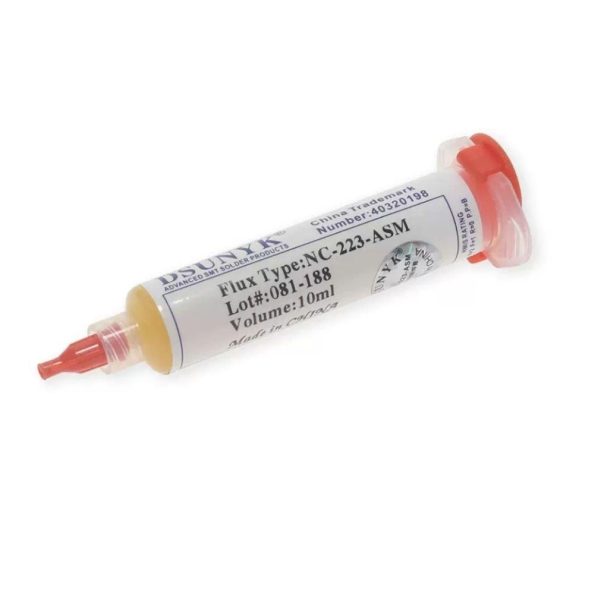
To repair a phone or laptop board at home you need, besides an iron with precise temperature control, gel flux, thin 0.8 mm solder, two pairs of tweezers and a heat-resistant mat. No-clean flux (NC-223, NC-559) doesn’t need washing, and a fine-needle flux lets you apply it precisely without flooding neighbouring parts.
Replacing a charging port, resoldering a button or restoring a lifted trace is quite doable at home. The key is tools scaled for small work: what’s fine for wires is too big and too hot on a phone board.
The minimum kit
| What | Why | What to get |
|---|---|---|
| Iron with precise temperature | small parts overheat easily | digital 120 W or 908S |
| No-clean gel flux | stays on pads, no washing | DSUNYK NC-223-ASM |
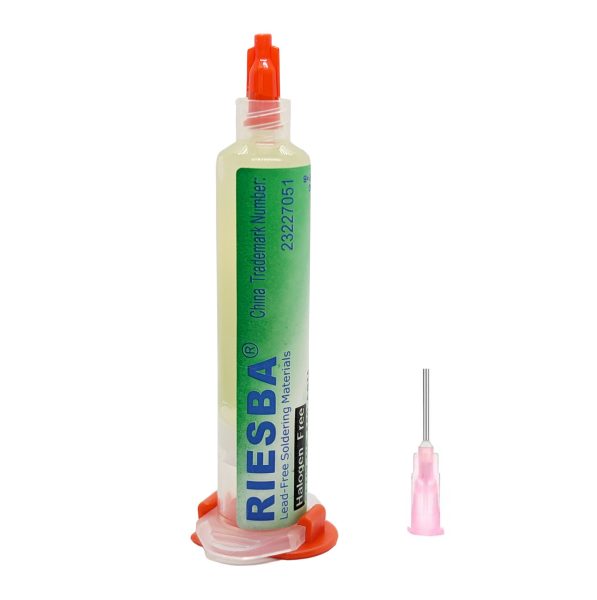
| Fine-needle flux | precise application, traces | Riesba NC-559-ASM |
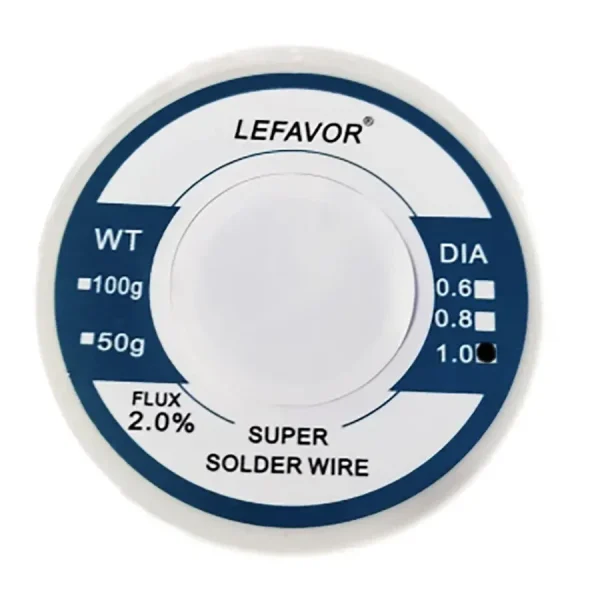
| 0.8 mm solder | little tin on a fine pitch | Lefavor 63/37, 0.8 mm |
| Tweezers | hold and place SMD | curved, vacuum |
| Mat | parts don’t get lost, desk stays intact | S-120 |

Why no-clean flux
Washing flux out from under chips on a phone board is hard. No-clean flux leaves minimal, low-corrosion residue after soldering, so you can leave it. NC-223 is thicker and stays on pads — handy for reballing and SMD. NC-559 comes with a fine needle tip for precise application — for trace repair and tight spots. More on fluxes in “RMA-223 or NC-559”.
Replacing a small SMD part
- Apply flux to the old part’s leads.
- Remove the part: heat the leads in turn and lift it with tweezers, or clear the solder with braid — see “How to desolder a part”.
- Clean old tin off the pads and add fresh flux.
- Tin one pad, place the new part with tweezers and tack that lead.
- Check the part sits straight, then solder the remaining leads with thin solder.
Flusenko’s tip. Start at a lower temperature than seems necessary and raise it gradually. A lifted pad on a phone board is a whole different repair, and an extra 20 °C is the usual culprit.
Good to know
- Disconnect the battery before you start.
- Photograph the board first — it makes reassembly easier.
- Large chips with many pins are usually removed with hot air — an iron can’t heat them evenly.
Fluxes, tweezers, thin solder and a mat together — in the “SMD and phones” kit. No iron yet? Start with “How to choose a soldering iron”.
FAQ
Can no-clean flux really be left on?
Yes, it’s designed to leave minimal, low-corrosion residue. If residue gets in the way of inspection or contact, wipe it off, but it isn’t required.
Which solder for phone repair?
Thin 0.8 mm 63/37: it melts at a single point and sets instantly, and thin wire doesn’t flood neighbouring contacts.
Can a lifted trace be repaired?
Often, yes: scrape the trace back to copper, apply flux with a fine needle and bridge it with thin wire or tin over the break. It takes precise temperature and patience.

