
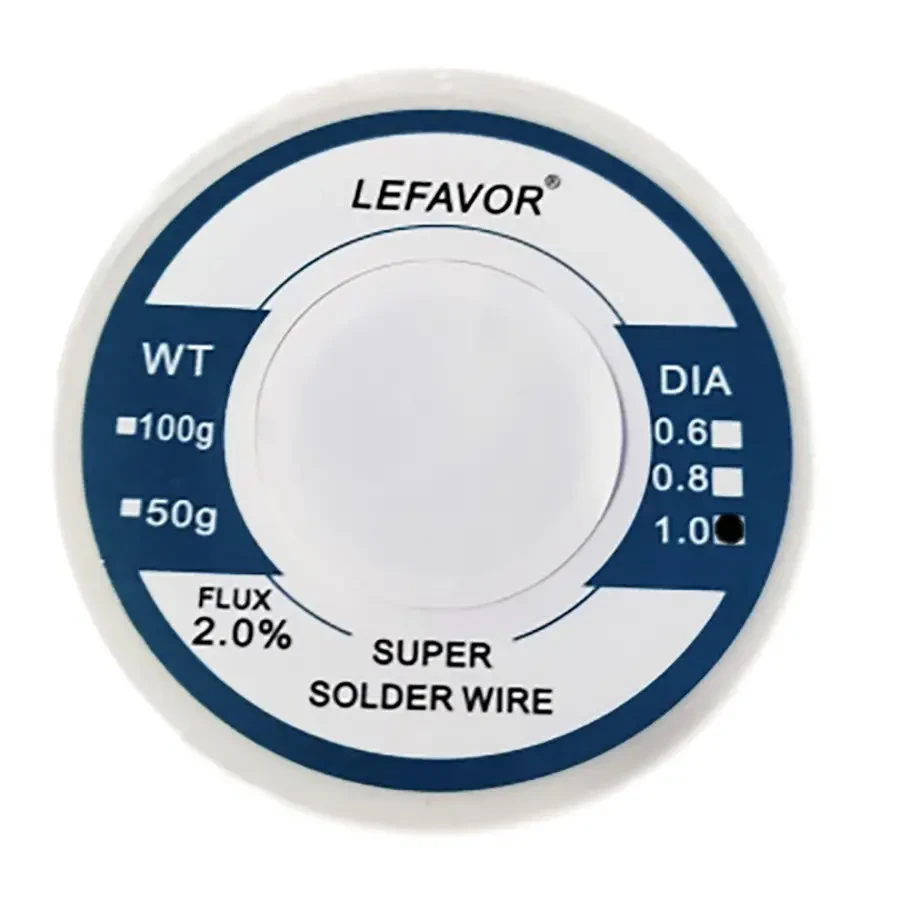
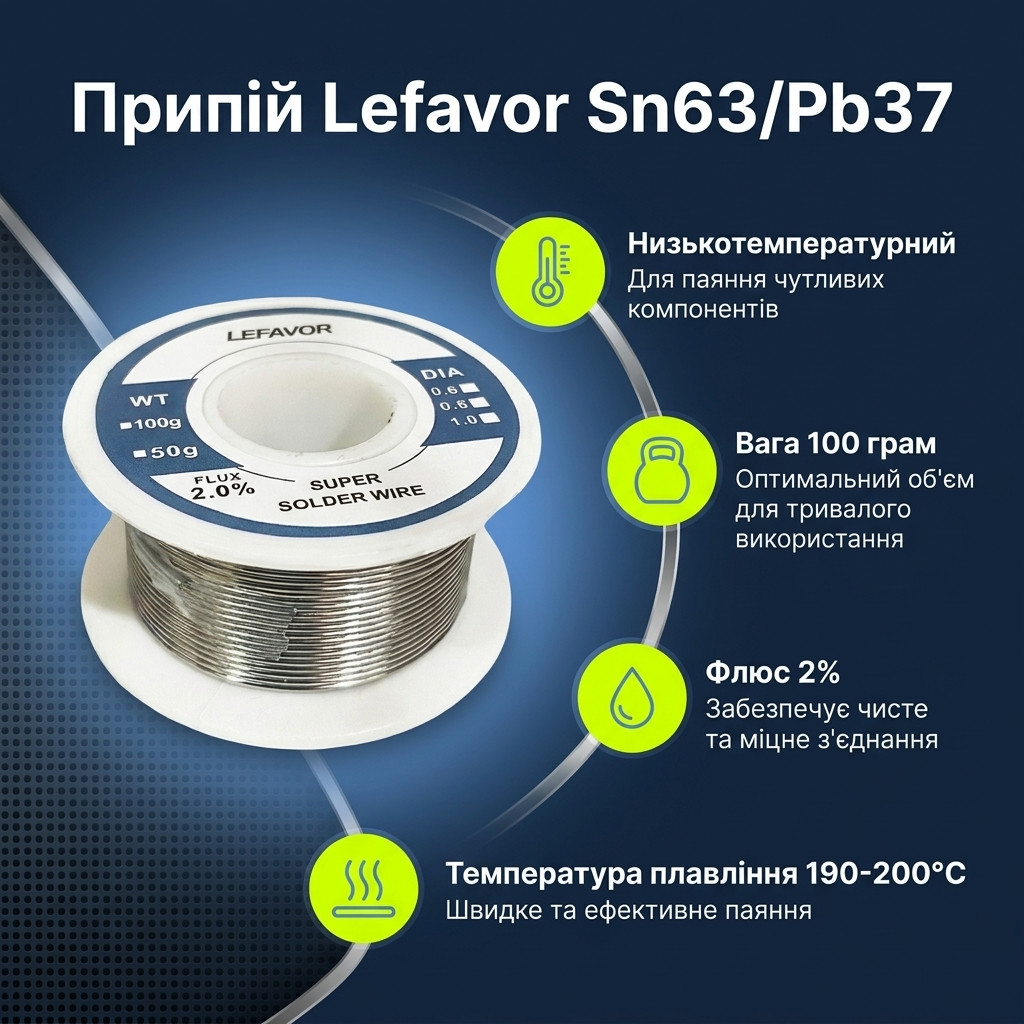
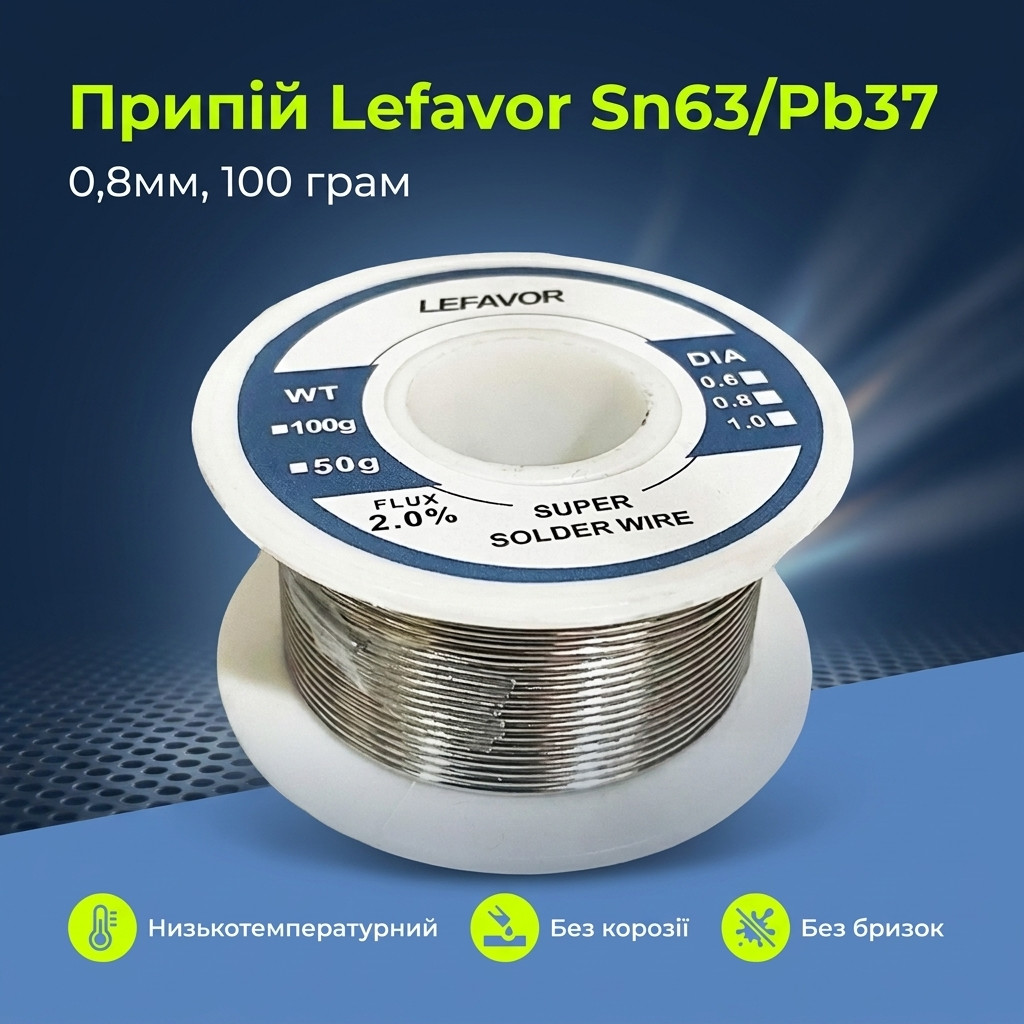
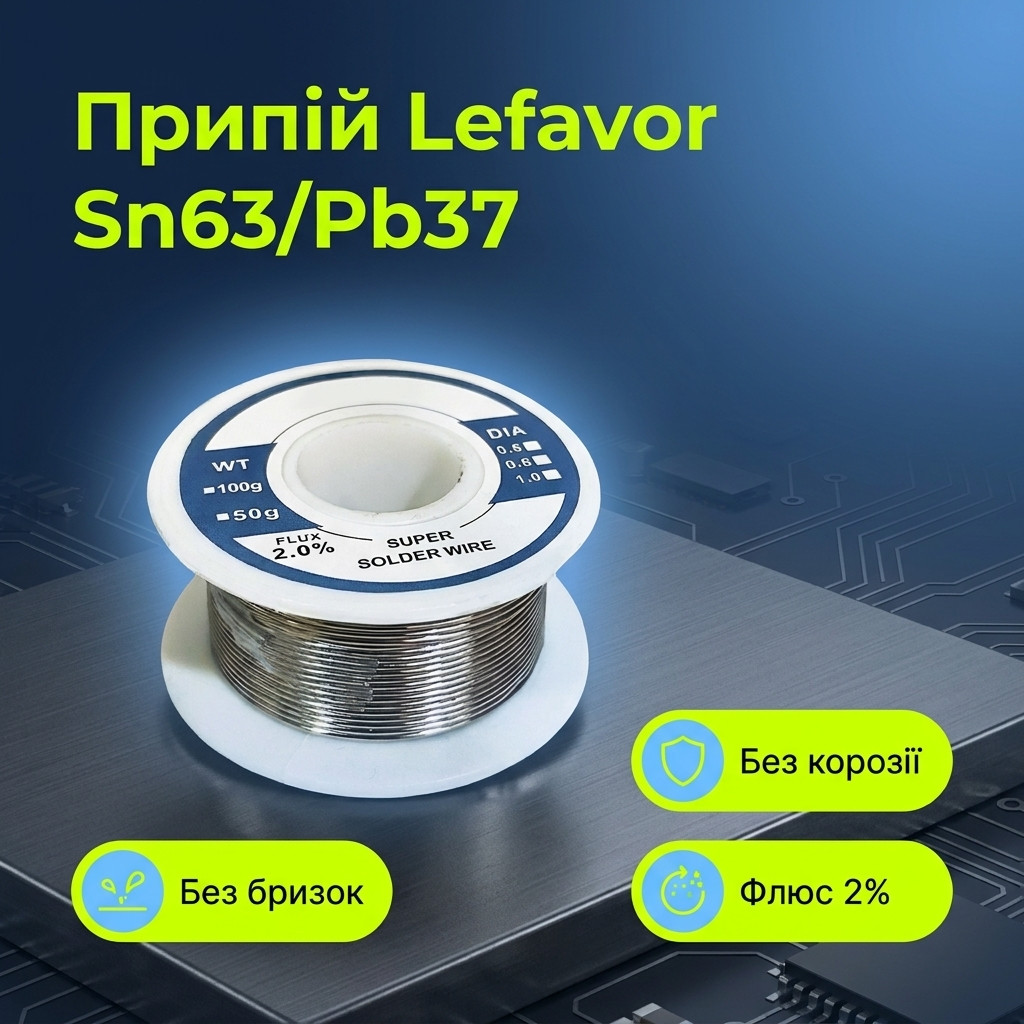
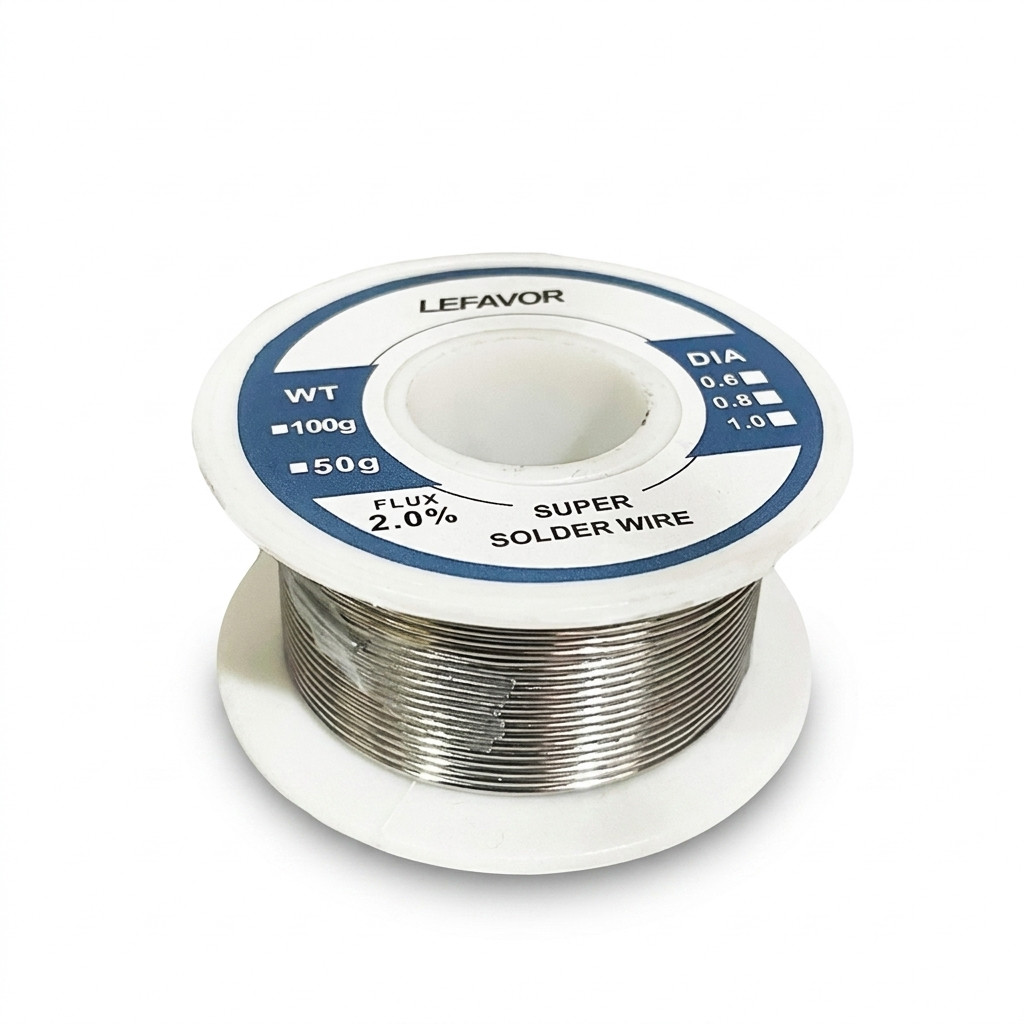
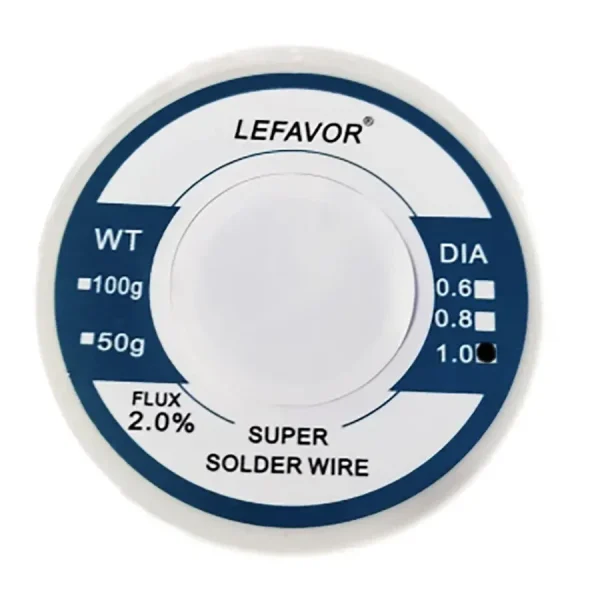
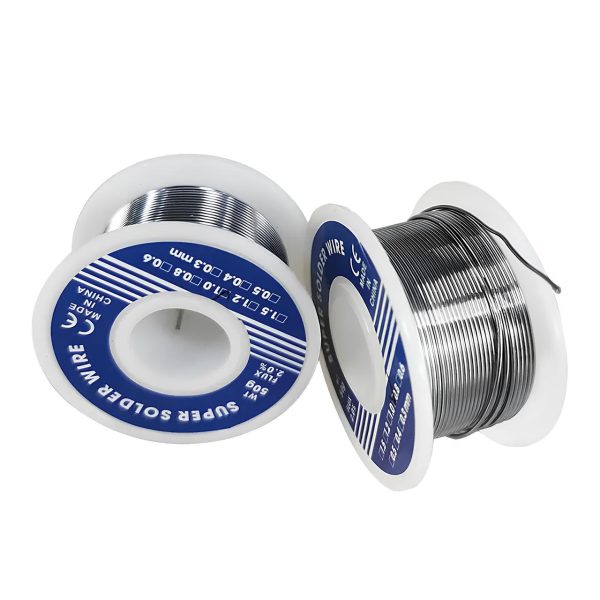
The Lefavor solder spool weighs 100 g together with its 0.8 mm wire. The Sn63/Pb37 alloy is low-melting, with a supplier-stated melting range of 190-200 °C, and the core carries 2% solid flux with low-temperature activity. It suits dense SMD and through-hole work, repair service, prototypes and training.
Specifications
| Brand | Lefavor |
|---|---|
| Alloy | Sn63/Pb37 — 63% tin, 37% lead |
| Wire diameter | 0.8 mm |
| Flux | Solid, low-temperature, for soldering |
| Flux share | 2% |
| Melting | 190-200 °C |
| Alloy class | Low-melting tin-lead |
| Weight with spool | 100 g |
| Packaging | Spool |
| Quantity | 1 pcs |
What you get
- Fewer bridges on crowded boards — the 0.8 mm gauge delivers a small dose of solder.
- No separate flux pot — the wire holds 2% solid flux.
- Volume for regular work — a 100 g spool including the wire.
- Low-melting alloy — Sn63/Pb37 melting at 190-200 °C.
- Easy pay-out — wire on a spool does not tangle in the tool drawer.
Who it is for
Service centre technicians who solder daily and like having stock on a spool; engineers building prototypes; teaching labs that need solder for practical sessions; home users who repair appliances and assemble electronic devices.
Who should look elsewhere
Products that require lead-free soldering cannot use this alloy: it is 37% lead. For thick power cables 0.8 mm wire is awkward, and the supplier does not state whether the flux is no-clean.
Applications and compatibility
Electronics and radio engineering, prototyping, device assembly, home appliance repair, service repair of computers, smartphones, household and industrial electronics, soldering SMD and through-hole components on circuit boards, practical classes in educational institutions. The supplier does not name specific compatible equipment.
In the box
One spool of Lefavor Sn63/Pb37 solder, 100 g.
Questions and answers
What flux is inside the wire?
A solid flux with a low-temperature activity range, 2% by share. The supplier does not disclose its chemical type.
Is 0.8 mm enough for soldering wires?
For thin signal wires, yes. Thick wires and terminals take longer to feed, so thicker solder is handier there.
What does 190-200 °C in the listing mean?
It is the melting temperature the supplier gives for this solder. Set your iron to suit the size of the part.
Reviews
There are no reviews yet.