Solder 63/37 or 60/40, 0.8 or 1 mm: how to choose
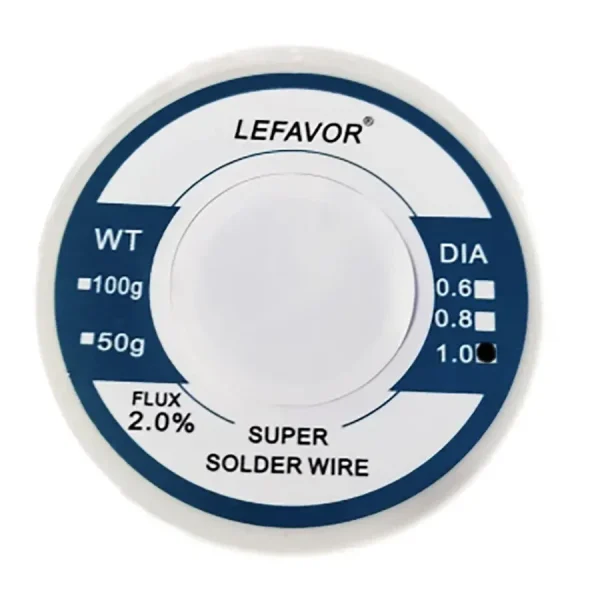
63/37 alloy (63 % tin, 37 % lead) melts at a single point — about 183 °C — and sets instantly, so joints come out smooth even for beginners. 60/40 melts over a small range and is less forgiving of movement while it sets, but it’s a classic for wires and the workshop. Diameter: 1 mm is all-round, 0.8 mm is for fine, dense work and SMD.
Solder isn’t just “tin”. The alloy decides how it melts and sets; the diameter and flux core decide how precisely you dose metal and whether you need extra flux.
Solder in our catalogue
| Solder | Alloy and diameter | Flux core | Best for |
|---|---|---|---|
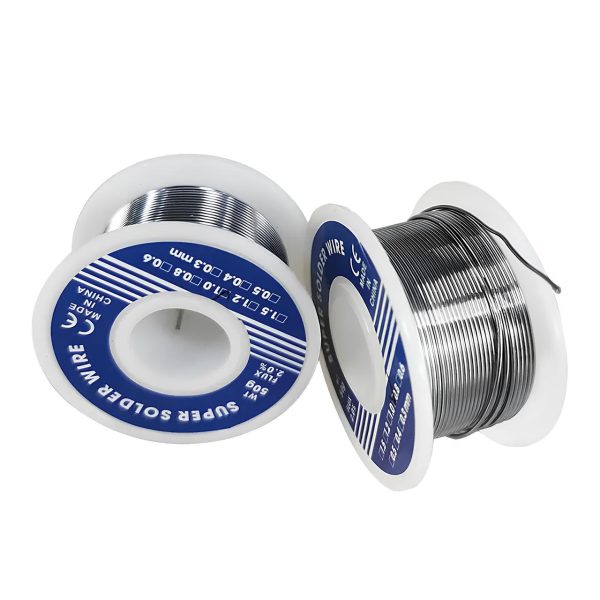
| Lefavor, 50 g coil | Sn63/Pb37, 1 mm | rosin, 2 %, no-clean | boards, wires, phone and laptop repair |
| Lefavor, 100 g reel | Sn63/Pb37, 0.8 mm | solid, 2 % | dense boards, SMD, repair shops |
| RESTEQ, 50 g reel | tin-lead, 1 mm | rosin ~2 %, active | old oxidised wires, tinning |
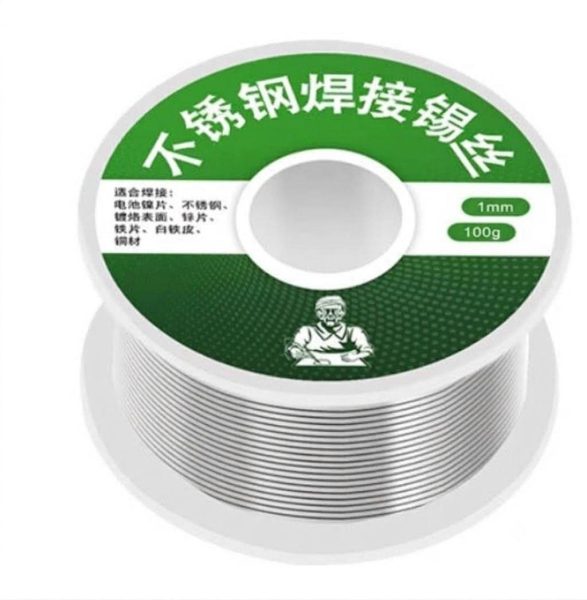
| JJS, 100 g reel | Sn60/Pb40, 1 mm | not specified by maker | workshop, contacts, wires |

63/37 or 60/40
63/37 is eutectic: it goes from liquid to solid at once, with no “mushy” phase. The joint sets as soon as you lift the tip, so there’s less chance of disturbing it. That’s why 63/37 is loved for boards and SMD.
60/40 melts over a small temperature range and stays plastic for a moment. If the part moves then, the joint can turn dull and brittle. For wires, contacts and big joints that’s not an issue, and a 100 g reel is handy in a workshop. The maker doesn’t specify a flux core for JJS, so use it with separate flux.
1 mm or 0.8 mm
- 1 mm — all-rounder: wires, connectors, through-hole parts, most boards. Feeds metal quickly and tins well.
- 0.8 mm — when the pitch is fine and you need little tin: SMD, phones, dense boards. Easier not to bridge neighbouring pins.
Flusenko’s tip. Keep two reels on the bench: 1 mm for rough work and 0.8 mm for boards. Switching between them is faster than fighting excess tin on a fine pitch.
Flux core: is it enough?
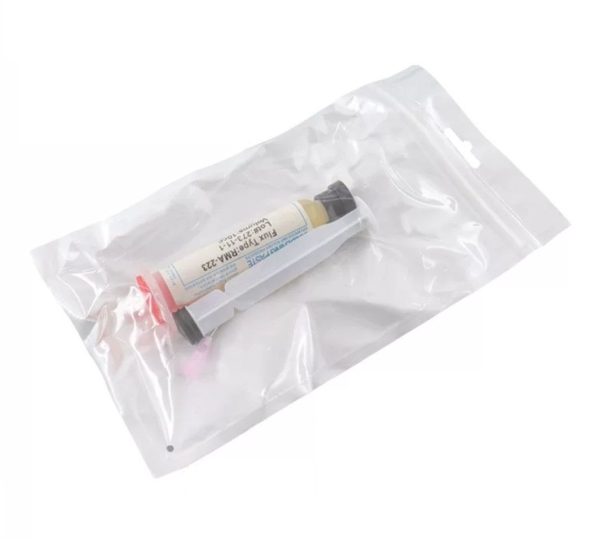
The flux in the wire’s core (about 2 % in our Lefavor and RESTEQ) goes into the joint with the metal. For fresh wires and leads that’s enough. For oxidised contacts, BGA and SMD add flux paste — for example RMA-223 with a plunger; we explain flux differences in “RMA-223 or NC-559”.
FAQ
Is it OK to use leaded solder at home?
Yes, if you ventilate the room, don’t eat at the bench and wash your hands afterwards. Leaded solder melts lower and is easier to work with, which is why it’s still chosen for repairs.
What temperature for 63/37?
The alloy melts at about 183 °C, but the tip must be hotter to heat the part: usually 300–340 °C, a bit more for heavy contacts.
Reel or coil — what’s the difference?
Only packaging: a reel is handier on the bench and the wire doesn’t tangle. A 50 g coil is a compact option for a few repairs.